How to collect and report adult Japanese beetles
We need your help to protect Mesa County’s agriculture and economy from Japanese beetles as they begin to transition from their grub form to adult beetles, emerging from pupation between late June and October. You can report adult Japanese beetle captures to best support our community in our efforts to eradicate the invasive species, allowing our plants and fruit to continue thriving.
Now is a crucial time to take proactive action and report any Japanese beetle captures before they reproduce by laying eggs within grass.
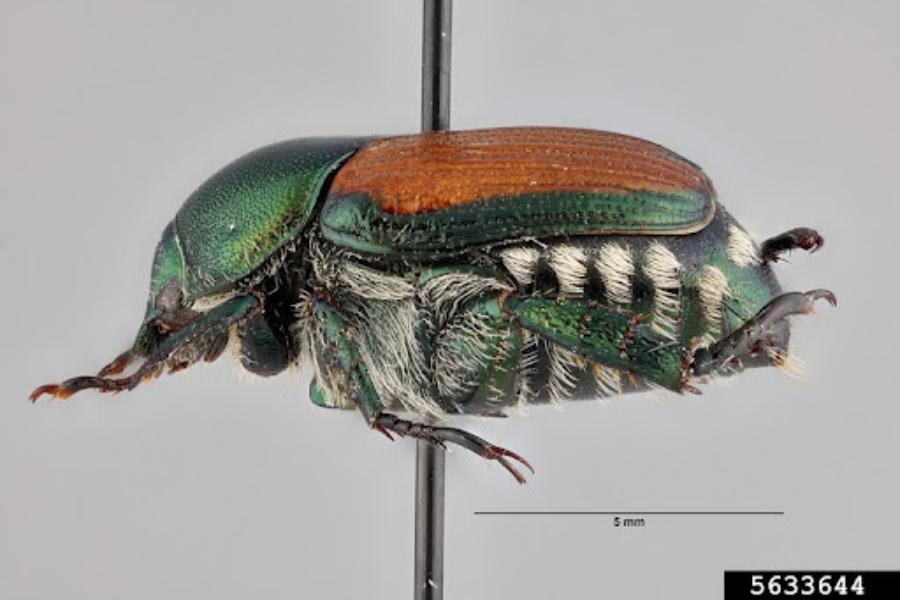
How to identify an adult Japanese beetle
- Oval, flattened body, ⅜ to ½ inch long, approximately the size of a coffee bean
- Metallic green thorax (the middle section of the insect's body, located between the head and the abdomen)
- Copper-brown wing covers
- 5-6 white hairy tufts along the sides of the abdomen, two at the rear
How to collect and report a Japanese beetle
All Japanese beetle reports must be made with the adult beetle in possession.
- Collect the adults by brushing them into a clear, hard-sided container.
- Place the container in the freezer to exterminate the beetle.
- Take the beetle to the Colorado State University Extension Office at 2775 US-50.
- Please contact them at 970-244-1834 with any questions you may have.
Helpful information to provide with the beetle includes:
- The address where the beetle was captured
- The environment in which the beetle was caught
- The date and time of the beetle capture
- Your name and contact information
These invasive species have been observed feeding on 300 different species of plants, including many ornamental or fruit-bearing plants, such as roses, Virginia creepers, peaches, apples, grapes, and garden plants, which are all susceptible to Japanese beetle adults feeding on them.
Are you interested in helping us determine the effectiveness of our treatments? Homeowners can consent to have a monitoring trap placed on their property by emailing the Noxious Weed and Pest Management department at weed.pest@mesacounty.us. Please note that traps will be placed where needed to collect monitoring data, so not every property may receive a trap.
Thank you for your ongoing support in defending Mesa County from the Japanese beetle. Please visit our Japanese Beetle Eradication webpage to learn more about Mesa County’s eradication plan and how you can contribute to its success.
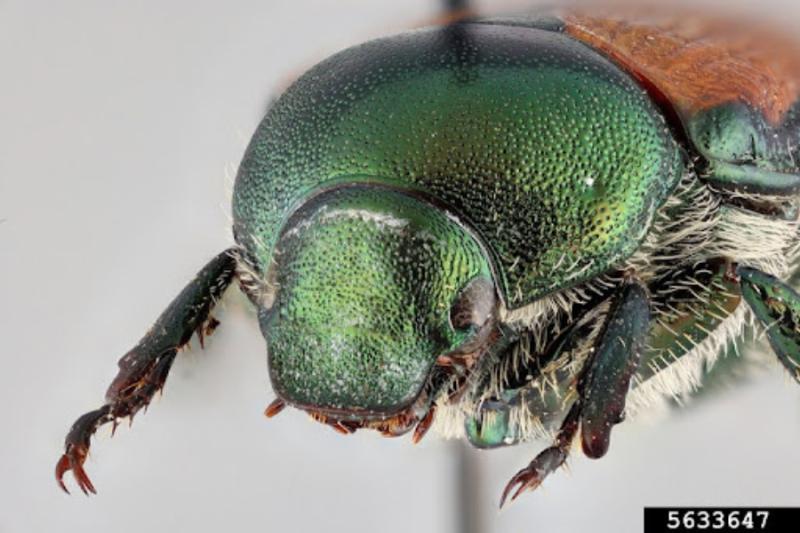
PHOTO CREDIT: Paul Langlois, Museum Collections: Coleoptera, USDA APHIS PPQ, Bugwood.org
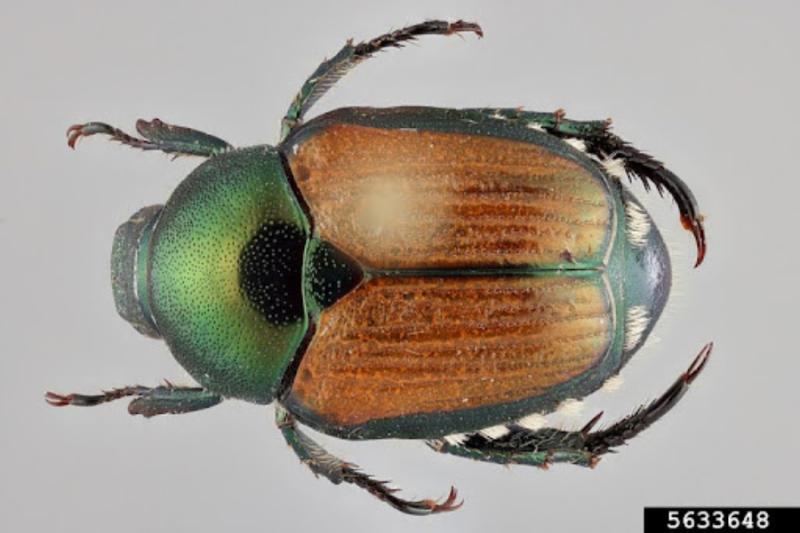
PHOTO CREDIT: Paul Langlois, Museum Collections: Coleoptera, USDA APHIS PPQ, Bugwood.org
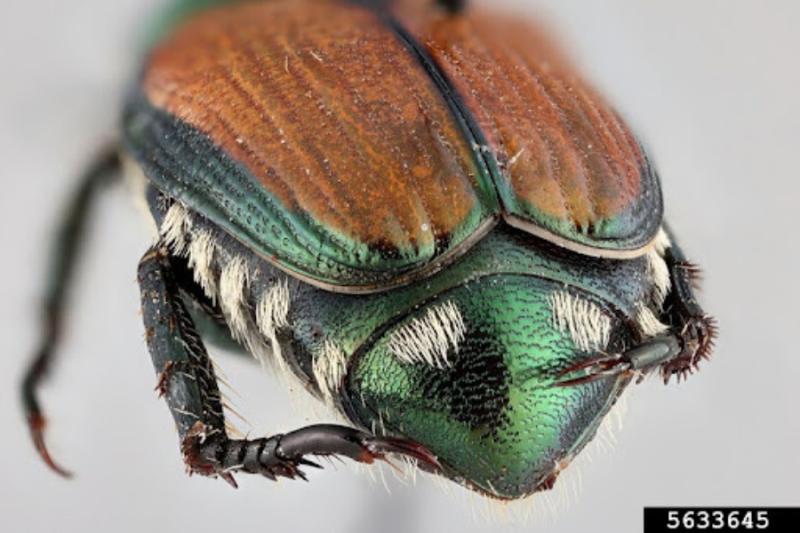
PHOTO CREDIT: Paul Langlois, Museum Collections: Coleoptera, USDA APHIS PPQ, Bugwood.org