
Plants that Japanese Beetles Love (and Hate)
Adult Japanese Beetles are about ½ inch long with a metallic green body and copper-brown wing covers. Small white tufts of hair line the abdomen. Larvae of Japanese Beetles are soft bodied white grubs that are C-shaped with brown heads. They are about the size of a penny. Many other white grubs resemble Japanese Beetle larvae and require an entomologist to identify. Generally, Japanese Beetle larvae can be found in regularly watered lawns feeding on grass roots. If you suspect Japanese Beetle grubs, bring a sample to the Colorado State University Extension Office at 2775 US-50, Grand Junction. The entomologist can identify the grub so long as they are property collected. Taking pictures, bagging and freezing, or placing them in a vial with alcohol are valid ways to collect.
Adult beetles lay eggs between June and August in turf grass. Larvae hatch soon after and begin feeding on grass roots, severing roots from leaf blades causing die back. Grubs then bury overwinter in the soil and emerge in spring. Pupation occurs in early June. Adults emerge between June and August and can live for 30-60 days.
Adult Japanese beetles have been observed feeding on over 300 different species of plants, many of which are common garden and landscape plants. The adults can feed on leaves, flowers, and fruits. They “skeletonize” leaves by feeding on the softer tissue between leaf veins. They can also attract other adults to the same plant causing more damage using pheromones. Adults are very attracted to strong floral essence smells.
Plants commonly damaged by Japanese beetle adults include: Virginia creeper, roses, grapes, apples, peaches, plum, cherry, apricot, raspberry, evening-primrose, corn, Japanese maple, clematis, sunflower, morning-glory, peony, asparagus, rhubarb, hibiscus, zinnia, hollyhock, dahlia, etc.
Consider planting resistant species to adult feeding like: lilac, boxwood, juniper, red maple, redbud, holly, sweet gum, spruce, pine, columbine, begonia, poppy, hosta, coreopsis, and stonecrop. Geranium leaves and flowers contain a substance that temporarily paralyzes Japanese beetle adults, making them easy to pick up and put in soapy water!
Japanese beetle threatens multiple aspects of what makes Mesa County unique. This pest has been shown in more than one case to cause significant damage and require more pesticide use as it establishes. Eradication and continued monitoring is the only way to effectively manage Japanese beetles from causing more damage, harm economic stability, and reduce long term pesticide treatments in Mesa County.
The Japanese Beetle Eradication Program was launched after Japanese beetles were detected in north Grand Junction in 2022. Building on a successful eradication in Palisade in the early 2000s, the Mesa County Board of Commissioners designated the beetle for eradication and began offering free treatments to consenting parcels. These efforts protect landscaping, public green spaces, and Mesa County’s agricultural sector, which generates over $58 million in crop income and sustains many hardworking families. Continued success of the program is essential to safeguarding the local economy and the community’s long‑term prosperity.
Contact:
970-902-3886
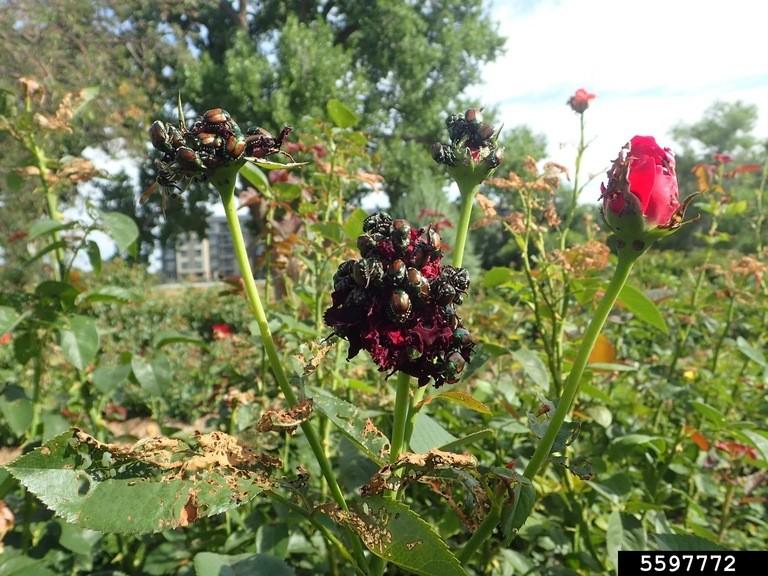
Adults feeding on roses. Melissa Schreiner, Colorado State University, Bugwood.org

Japanese beetle damage to grape leaves. Colorado State University https://extension.colostate.edu/resource/japanese-beetle/
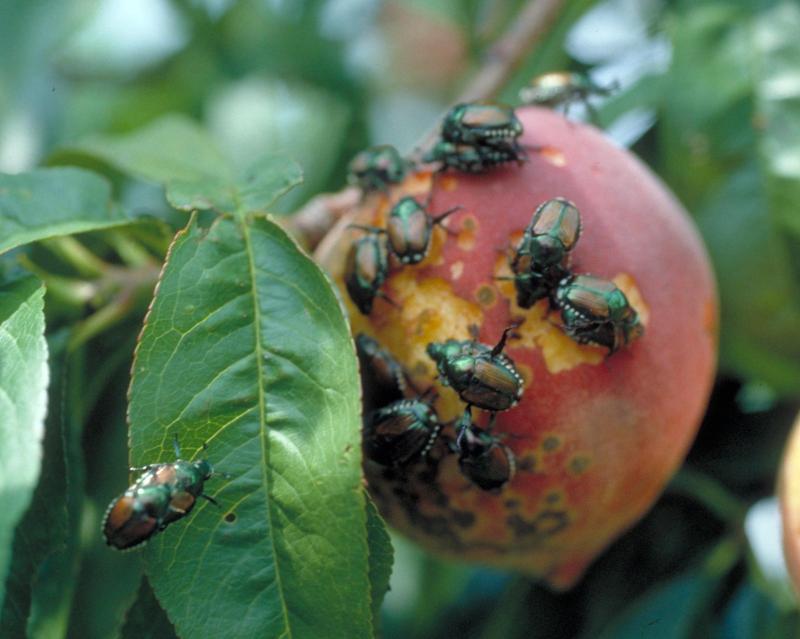
Adults feeding on fruit. Ric Bessin, University of Kentucky https://fruitscout.mgcafe.uky.edu/japanese-beetle-peach
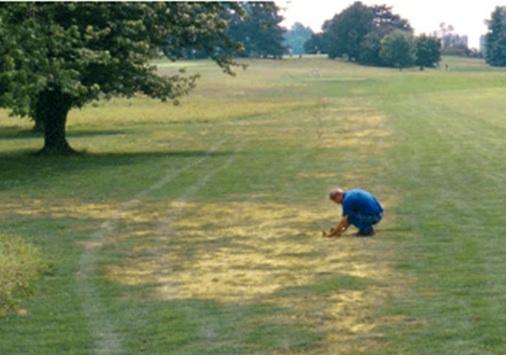
Japanese beetle grub damage. Ohio State University