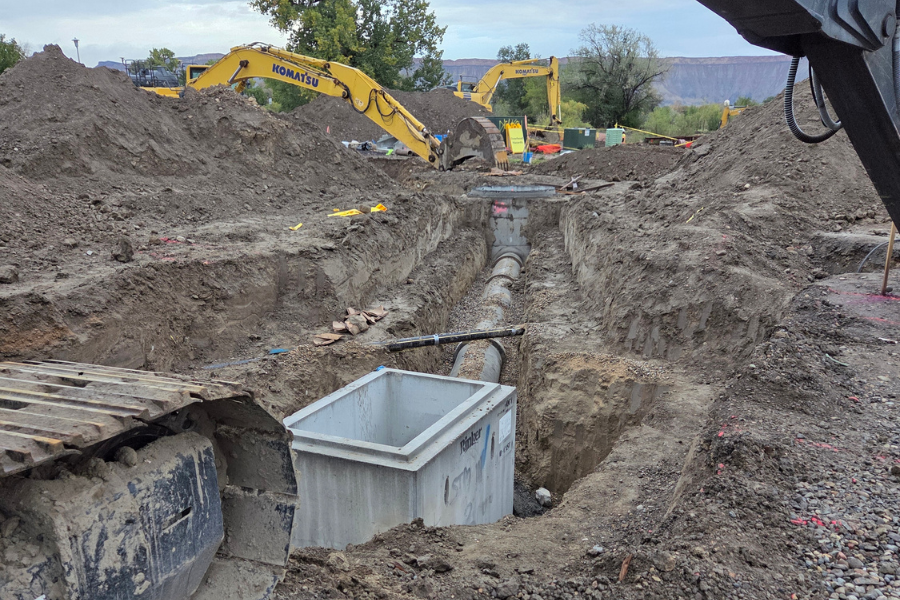
Weather creates challenging conditions for construction projects
Recent rain and flooding have created challenges for several ongoing road construction projects including Orchard Avenue improvements and the recently started 32 1/2 Road project, resulting in delays and interruptions to scheduled construction work.
We understand that road closures, changing access conditions, and extended construction timelines can be frustrating for residents and drivers.
One of the biggest challenges following significant rainfall is the condition of the soil. Road construction requires dry, stable ground to properly prepare road bases, install materials and achieve the compaction necessary for a durable roadway.
Rain may damage finished work
Excessively wet or muddy soils cannot be compacted into a stable building surface. Even after the rain stops, underlying soils can take days or weeks to dry enough for work to resume.
Rain and flooding can also damage work that has already been completed. Erosion, saturated subgrades, and displaced materials may require crews to remove and replace portions of finished work before construction can continue. Although this adds time to a project, addressing the damage properly is necessary to make sure the finished roadway meets quality and durability standards.

Effect on temporary roads
Temporary roads, gravel access routes, and alternate entrances can quickly deteriorate during prolonged wet weather. Traffic on saturated gravel surfaces can create deep ruts, soft spots, and potholes, making daily travel to and from homes increasingly difficult. Simply adding more gravel on top of an already saturated or deteriorated surface is not always an effective solution.
Without addressing the underlying soft material, additional gravel can sink into the mud, become displaced, or fail to correct the problem. Proper repairs may require allowing the ground to dry, reworking the existing surface, and rebuilding affected areas. We understand the frustration this creates and will continue addressing access and maintenance needs as conditions allow.
Work is paused, not forgotten
During periods of rainfall, flooding, or excessively muddy conditions, residents may notice little to no construction activity on roads that are currently closed for improvements. This does not mean the project has been forgotten or abandoned. Crews may be waiting for suitable ground conditions or repairing damage caused by previous weather events. Continuing construction in unsuitable conditions can compromise the quality of the finished roadway and create additional work, delays, and costs. Sometimes the best way to move a project forward is to wait for conditions to improve rather than risk completing work that will have to be removed and replaced.
We also ask residents to keep estimated completion dates in perspective. Some projects have anticipated completion dates six months or more into the future. Even when the weather improves, the effects of earlier rainfall and mud can continue to impact construction schedules.

We recognize the inconvenience these projects create, especially for those living within construction zones. Our goal remains to complete the work as efficiently as possible without sacrificing the quality and longevity of the finished roadway. We appreciate your patience, cooperation, and understanding.
Though weather is something we cannot control, we can control the quality of these projects, making sure they’re done properly to provide roadways that will serve our community for years to come.
For questions regarding specific road projects, residents may contact Mesa County's Construction Group Manager Josh Springer at 970-244-1653.