
Upper Grand Valley Pest Control District (UGVPCD)
Learn about our program
The Upper Grand Valley Pest Control District was formed in 1965 under Colorado Revised Statutes Title 35, Article 5, “Pest Control Districts”. Since it was established, the District has been renewed repeatedly with support from commercial fruit growers.
The purpose of the District is to protect commercial growers from insect, disease, and weed infestations as per C.R.S. Title 35, Article 4, the “Pest Control Act”.
Enforcement is accomplished through the Mesa County Horticulture Pest and Weed Representative. The Representative:
- Enforces the law
- Responds to complaints
- Makes sure that neglected or unmanaged fruit trees are cared for or removed
- Inspects nursery stock
- Educates the public
- Identifies and manages weed infestations
UGVPCD Pest Inspector
Ryan Surad was appointed as the Upper Grand Valley Pest Control District (UGVPCD) Pest Inspector on March 3, 2026 by the UGVPCD Board. In this role, the Pest Inspector will be responsible for:
- Performing all duties in compliance with the Colorado Pest Act and applicable laws and District policies.
- Responding to complaints within the boundaries of the District. The Pest Inspector will issue notices of his findings, provide recommendations and reports to owners, occupants, and affected persons on pest prevention, control, abatement, and mitigation measures.
- Preparing and maintaining inspection and compliance records and provide regular reports to the Board as requested.
- Coordinating with state and local agencies, laboratories, and stakeholders on identification, eradication, or control, and provide information to support enforcement actions. He will conduct inspections and surveys to detect, monitor, and assess pest infestations and movements.
- Providing education to property owners regarding the necessity of the District.
Upper Grand Valley Pest Control District Resolution (PDF)
File a complaint
Please use our form to submit a complaint to the Pest Inspector.
Get involved in your community
Pursuant to C.R.S. 35-5-105., an Advisory board made up of area growers assists the Inspector and directs the operation of the District. Advisory board members serve for a term of 10 years and are appointed by the Mesa County Board of Commissioners.
| Member | Term Expires |
|---|---|
| Ted Ruckman | Term expires: 12-31-2029 |
| Doug Colby | Term expires :12-31-2029 |
| Bruce Talbott | Term expires: 12-31-2029 |
| Gary Brauns | Term expires: 12-31-2029 |
| Brandon Black | Term expires: 12-31-2029 |
| Terry Moreland | Term expires: 12-31-2029 |
| Vacant |
To contact a member of the Upper Grand Valley Pest Control District Advisory Board, please email weed.pest@mesacounty.us.
Interested in serving on a Board or Commission? Visit our Volunteer Opportunities page to find the right job for you.
Upcoming Meeting
- Wednesday, March 25, 2026 at 4:00 p.m.
- Clifton Community Center
- 3170 D 1/2 Road, Clifton, CO 81520, enter on the west side of the building.
District Map
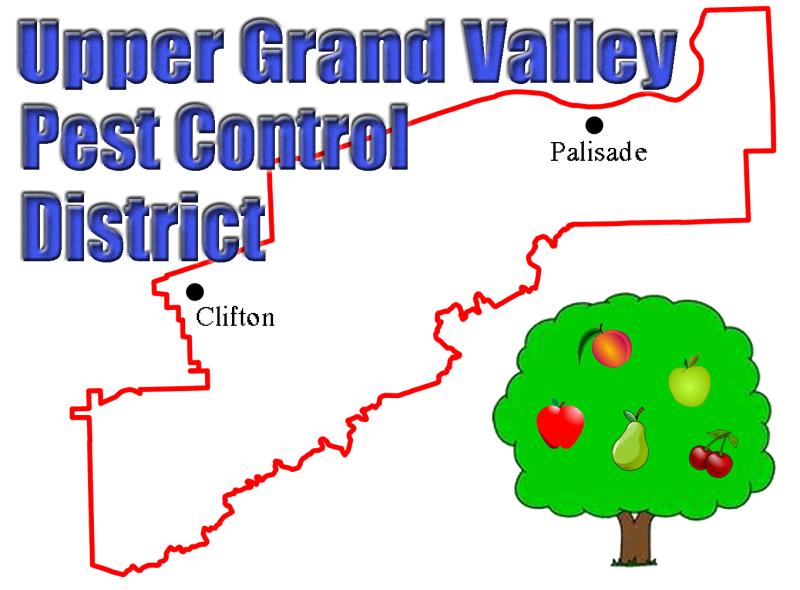
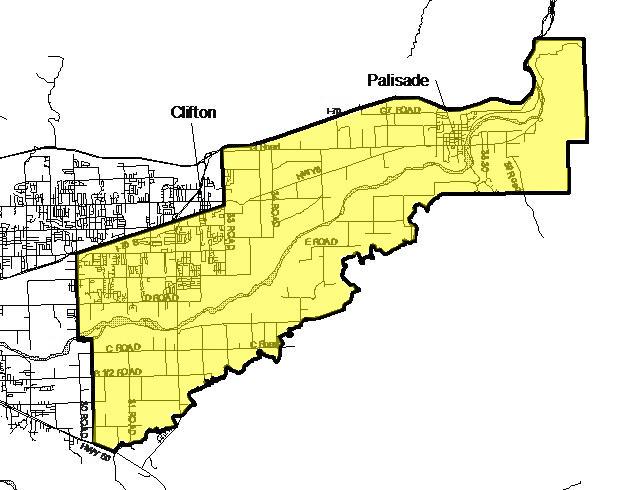
The UGVPCD encompasses the fruit growing area at the east end of the Grand Valley.
Boundaries
- I-70 on the north
- 33 Road on the West for the area North or the railroad tracks
- 30 Road on the West for the area South of the railroad tracks
- Cameo on the East
- Orchard Mesa Irrigation Canal Number 2 on the South
Resources for residents in the Upper Grand Valley Pest Control District
Help protect the vitality of our fruit industry
Backyard fruit trees can harbor pests and diseases that threaten commercial fruit production. Many homeowners may not realize the time and expense required for proper fruit tree care. To protect our local fruit industry, the Upper Grand Valley Pest Control District is sponsoring a Fruit Tree Removal Program.
Eligible participants within the district can receive $15-$50 per tree, up to a maximum of $250, as an incentive to remove non-commercial fruit trees. The payment amount depends on the size and condition of the trees. Eligible species include peach, nectarine, cherry, plum, apricot, apple, crabapple, and pear.
To qualify, trees must be inspected before approval. A check will be issued following a post-removal inspection. Please note that tree removal is the owner's responsibility. For questions about this program, please call 970-255-7121.
Colorado State University
- Tri River Extension Office- Serving Mesa, Delta, Montrose and Ouray counties.
- Backyard Orchard: Stone Fruits
- Master Gardener- Fruit Trees-Learn which fruits and veggies grow best in Colorado
- Master Gardener-CMG GardenNotes #770-771 Tree Fruits
Utah State University
For more information about pests to watch for, check out the Upper Grand Valley Fruit Pest Pocket Guide.
Check out our Pest of the Month for more information about possible threats to the District.