
Juvenile Diversion Program
The 21st Judicial District Attorney’s Office handles all the juvenile prosecutions in Mesa County. Juvenile cases differ from adult criminal cases in that the juvenile process focuses on the best interest of the child and preventing juveniles from entering the adult criminal justice system when possible.
Given the unique circumstances that often occur surrounding youth who commit crimes, the 21st Judicial District Attorney’s Office has a comprehensive juvenile diversion program for many first time and low level offenders.
This diversion program is an opportunity to divert their case out of the courts and gives the juvenile an opportunity to avoid having an adjudication on their record. The 21st Judicial District Attorney’s Office will screen all cases that come into the Juvenile Court system to determine if diversion is appropriate and in the best interest of both the child and the community.
For cases that do not go through the diversion program, a judge or magistrate will hear the case.
A juvenile prosecutor will be assigned the case from the District Attorney’s Office and both the juvenile and the parent(s) will be respondents to the case. The juvenile will have the opportunity to have an attorney represent them throughout the court process.

What is Juvenile Diversion?
When and How is the decision made to divert? A juvenile’s criminal case is referred to the District Attorney’s Office from law enforcement with a request for legal action. Most likely, the juvenile and family will have already received a “Promise to Appear” for a court date. A risk-needs assessment is normally completed by the officer, which is a screening tool that will help inform Diversion decisions. The director and juvenile prosecutor will review the police reports and the risk-needs assessment to make a decision whether the juvenile will be referred to Diversion or formally prosecuted in Court. If you are offered Diversion, the parents of the accused juvenile will be contacted by a Diversion Coordinator to schedule an interview.
You are also welcome to call the Juvenile Diversion office and speak to the Director to find out if Diversion is an option for your child. Please call 970-255-5098.
What is the criteria for offering diversion to a juvenile?
The decision to offer Diversion is based upon many factors with discretion left to the prosecutor reviewing the case:
- > Type and level of offense
- Prior law enforcement involvement
- Level of services needed by the youth
- Input from the victim
- Risk level to the community
- Juvenile’s willingness to be accountable for the crime
- Juvenile and family willingness to be supervised and amenability for change
- Whether the juvenile is already being supervised by another agency
- Has the juvenile previously been offered Diversion
What happens during Diversion?
If a juvenile is referred to Diversion, a Juvenile Diversion Coordinator (JDC) will review the case and contact the juvenile and parents for an appointment to be interviewed. This normally happens within 5 (five) business days after the District Attorney’s Office receives the law enforcement report. On occasion, a case may be referred to Diversion after it has already been filed into court. Sometimes that happens because we are seeking to obtain a protection order/no contact order with a victim first, we are unable to reach the juvenile/family, or we want to determine whether the juvenile can stabilize with behaviors before being referred to Diversion.
An initial interview is scheduled with the parents and the Juvenile. The family will be asked to fill out personal information forms and bring them to the conference, which takes place in the JDC’s office. A Diversion contract is created between the juvenile, the parents, and the JDC. Each contract is individualized to address the needs of each juvenile.
The basic Diversion Program requires
- School attendance
- Employment or participation in an positive extra-curricular activity
- Curfew
- Payment of fees
- Useful public service hours
- Restorative justice programs
- Payment of restitution if required
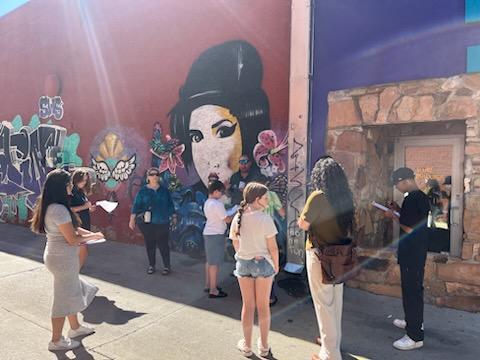
Depending on the needs of a juvenile, a Diversion contract may include other conditions such as drug/alcohol screening, evaluation and/or treatment, substance use/abuse education and classes, victim empathy, victim/offender mediation, anger management, mental health assessment, individual and/or family counseling, grief counseling, tutoring and mentoring or advocacy. Participants in Diversion may also access services from the Partners Program, Ariel Clinical Services, Colorado Mesa University, Mind Springs Health, Hilltop Youth Services, Mesa County Department of Human Services, Hospice, and various private counseling alternatives. The length of the Diversion contract may be determined by the risks and needs associated with each child.
What happens when the contract is completed?
When a youth successfully completes the terms of their contract, the case is closed, the case is thereafter automatically expunged from the juvenile’s record. An exit interview is conducted and the youth and parent(s) are asked to evaluate the program.
If the youth fails to comply with the terms of the Diversion contract, the case may be forwarded to court for formal prosecution. Statistics will be kept to include gender, ethnicity, race, DOB, class of offense, the result of either compliance or non-compliance and recidivism up to 3 years from closing.
Additional information
Juvenile Programs are offered to eligible candidates in both District and County Court areas. These programs are designed with the use of contracts, or agreements, that are established individually for youth that have received either a citation in County Court or a request for juvenile petition in District Court.
When a youth receives a ticket for minor in possession of alcohol, marijuana, or drug paraphernalia, they will need to appear in the First Appearance Center in the County Court system with their parent on the required date noted on the ticket. The Juvenile Diversion Coordinator then works through the court system to interview eligible youth for the Diversion Program, but the youth is still responsible to the Court during the contract period. If the youth fails to comply with the contract they are remanded back into the court.
Refer to the Restitution, Property Releases, Summons to appear in Court, and Subpoena sections.
All evidence in cases is held a minimum of forty-five days after sentencing. After the forty-five days have passed then evidence may be released. You must call the appropriate law enforcement agency to make arrangements to pick up your property. Early release of property may be possible for medical and work-related emergencies. In instances where there are co-defendants, there may be times when property needs to be held longer than 45 days after sentencing.
Many juvenile cases have restitution in some form as part of the disposition.
- If a child is placed on Diversion, the Diversion coordinator forwards the child to the Partner's Restitution Program or forwards restitution paid by the juvenile to the victims.
- If a child is placed on probation, the probation officer decides the amount of each payment and how often payments are to be paid. If the Child fails to pay, it is the probation officer's responsibility to bring the child back to Court.
- If a child is committed to the Department of Human Services, the Division of Youth Services monitors any restitution requirements.
- If the Child is paroled, the juvenile parole officer is responsible for monitoring restitution.
All restitution for Court (non-Diversion) cases is paid into the Registry of the District Court and distributed to the victims. The District Court Clerk keeps a record of these payments. You may contact the Clerk's office at >970-257-3625 for the status of any restitution that was ordered to be paid to you. Please have the court case number available.
The District Attorney's Office receives reports regarding juvenile delinquency activity from law enforcement agencies in Mesa County. These reports are reviewed by juvenile justice coordinators and an attorney and a decision is made regarding whether the Child should be summoned to court or diverted away from the Court.
If a diversion is pursued by this office, the parents or legal guardians of the Child will receive a letter setting a date for a diversion conference with one of our juvenile coordinators. If a formal delinquency action is thought to be necessary, the parents along with the child, will receive a summons to appear in court.
If you have already received the Summons to appear in the District Court, please continue reading this message for additional helpful information.
- On the day of the appearance in Court, you, your child, and any other parent or guardian will need to appear in court to be advised of:
- your rights,
- the procedures which will be used,
- the delinquent act or acts the child has allegedly committed,
- and the possible penalties for those acts should the child be found guilty or enter a plea of guilty.
- At this hearing the Judge will also inquire about the Child's desire for counsel, and the parents desire for counsel separate from the Child.
- If you wish to obtain counsel for yourself and/or your Child before the advisement hearing, you have every right to do so. It is not, however, required that you attend the first hearing with an attorney.
- For information on the process involved in obtaining court appointed counsel for the indigent, please contact the Public Defender's Office at 970-245-9122.
- If you wish to discuss a resolution of your Child's case: Please read the following carefully.
- Though it is proper for the prosecuting attorney to speak with you and/or the child before the advisement hearing and before you hire counsel, you are under no obligation to do so. If you do hire or obtain counsel for your child, a parent or guardian that is not represented may still speak directly to this office's staff.
- Once counsel is obtained the party represented by that attorney cannot engage in conversation with our staff unless their attorney is present. It is improper for this office's staff to speak directly to a person represented by an attorney without that attorney's presence.
Failure in any of the diversion programs or the alleged commission of a serious delinquent act, or a prior history of delinquent acts are all factors considered when the decision is made whether to summons a child to appear in a delinquency proceedings. For more detailed information refer to the Summons to Appear in Court section.
Location and contact information
For questions about the program contact the Director of Juvenile Intervention, Jasmine Hill
- Phone: 970-255-5098
- Email: Jasmine.Hill@mesacounty.us
To contact the program office call 970-255-5098.
The programs are located in the same building as the CMU Student Wellness Center on the north side of the building.
